Incident Response & Ransomware Readiness Services
Univision Computers provides incident response and ransomware readiness services to businesses that need a defined way to prepare for, contain, and recover from cyber incidents.
Ransomware and other security incidents move quickly from initial access to widespread disruption. The organizations that recover fastest are the ones that decided in advance who responds, what gets isolated, which systems come back first, and whether their backups can actually be restored.
Univision Computers supports that capability in three forms: a ransomware readiness assessment that measures current preparedness, an incident response retainer that establishes escalation paths before an incident occurs, and hands-on digital forensics and incident response (DFIR) during an active breach.
Outcomes you can expect:
- Reduced ransomware blast radius through validated controls and tested response playbooks
- Faster containment and recovery through predefined incident-response workflows
- Executive-level reporting and evidence preservation that supports legal, insurance, and compliance and security requirements
- Stronger resilience through backup validation, network segmentation, EDR tuning, and identity hardening
Incident response is one component of the broader network security services Univision Computers delivers.
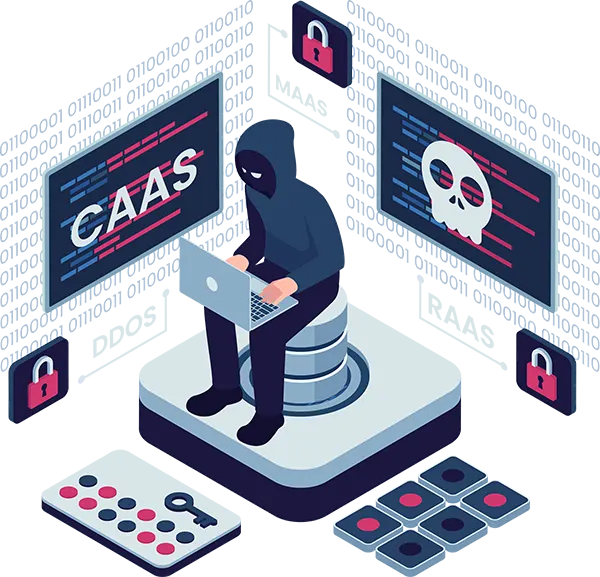
What Is Ransomware Readiness?
Ransomware readiness is an organization’s measured ability to detect, decide, contain, and recover when ransomware reaches its environment.
Readiness is not a control checklist. It is a capability that spans people, process, and technology, and it can be assessed and validated before an attack rather than discovered during one.
Modern ransomware groups commonly operate with double extortion: they exfiltrate data before encrypting it, then threaten publication regardless of whether the victim can restore from backup. That tactic changes what readiness has to cover.
Readiness against double extortion depends on four capabilities:
- Containment speed. Endpoint detection and network controls determine how much of the environment an attacker reaches before isolation.
- Privilege control. Identity is the practical perimeter. Restricted privileged access limits how far a compromised credential travels.
- Exfiltration visibility. Logging and detection determine whether data theft is observed or discovered in a ransom note.
- Recovery confidence. Immutable backups and documented restore testing determine whether recovery is a decision or a hope.
Univision Computers designs readiness programs around these tactics rather than around a generic control list.
Ransomware Readiness Services
Univision Computers strengthens and validates readiness across the following areas.
Ransomware Readiness Assessment
Univision Computers assesses how prepared an organization is to respond to ransomware, covering the processes, controls, technologies, and assigned responsibilities that determine response and recovery outcomes. The assessment produces a documented view of current capability and a prioritized set of gaps.
Incident Response Playbooks and Runbooks
Univision Computers develops response procedures for common security events, including ransomware, phishing, endpoint compromise, and domain takeover. Playbooks give technical teams and decision-makers a defined path to follow rather than an improvised one.
Tabletop Exercises
Executive and technical tabletop exercises let teams rehearse a response before a real incident. Exercises test decision-making authority, escalation procedures, internal responsibilities, external communications, and whether the existing response plan survives contact with a realistic scenario.
EDR and MDR Tuning
Univision Computers reviews and tunes endpoint detection and MDR capabilities to support earlier detection and faster containment of suspicious activity.
Identity and Access Hardening
Univision Computers strengthens identity controls including multi-factor authentication, privileged access management, conditional access policy, and service account governance. The objective is to make a compromised credential harder to use for lateral movement or persistence.
Network Segmentation and Firewall Review
Univision Computers reviews segmentation design and firewall policy to limit how far an attacker can move after compromising one system or account.
Backup and Disaster Recovery Validation
Backups only matter if they restore. Univision Computers evaluates backup and disaster recovery readiness, including immutable backup practices, documented restore testing, and alignment with stated recovery time and recovery point objectives.
Logging and Visibility
Univision Computers reviews logging coverage, alerting, audit trails, and SIEM use cases to establish the visibility an investigation requires.
The Incident Response Process Univision Computers Follows
Preparation
- Define who is contacted during an incident
- Establish who holds authority to make critical response decisions
- Identify important systems including email, servers, backups, cloud environments, and business applications
- Confirm access to essential logs, systems, and recovery resources
- Verify that backups can be restored
- Build step-by-step playbooks for common incidents, with particular attention to ransomware
Identification
- Confirm whether the event is an actual incident or a false alarm
- Determine which computers, accounts, servers, applications, or cloud services were affected
- Investigate likely access paths such as phishing, stolen credentials, or exposed remote access
- Look for evidence of ransomware activity, unauthorized access, or data theft
Containment
- Remove malware and persistence mechanisms
- Identify and close exploited access paths
- Apply patches and configuration changes
- Correct exposed or insecure access
- Clean or rebuild affected systems before they return to service
Eradication
- We remove malware and any “back doors” the attacker left behind
- We fix the weakness that let them in (patching, configuration changes, closing exposed access)
- We clean or rebuild affected systems so they’re safe to bring back
Recovery
- A report describing the incident, affected systems, and response actions taken
- Root-cause findings
- A prioritized remediation plan
- Updates to incident-response plans and playbooks
- Security improvements based on evidence from the investigation
Post‑Incident Review
- You get a clear report: what happened, what was impacted, what we did
- We provide a prioritized to-do list to strengthen security going forward
- We update your plan and playbooks based on what we learned
Incident Response & Ransomware Readiness FAQs
What Makes Ransomware So Disruptive?
Modern ransomware groups commonly use double extortion: encryption plus data theft. That means readiness must address:
- Containment speed (EDR + network controls)
- Privilege control (identity is the new perimeter)
- Exfiltration visibility (logs + detection)
- Recovery confidence (restore testing, immutable backups)
We design your readiness around these real-world tactics.
What is incident response in cybersecurity?
Incident response is the structured process of identifying, containing, eradicating, and recovering from security events—such as ransomware, malware, unauthorized access, and data breaches—while preserving evidence and reducing business impact.
What is ransomware readiness?
Ransomware readiness is the ability to prevent, detect, contain, and recover from ransomware. It includes playbooks, tabletop exercises, EDR visibility, identity hardening, segmentation, and validated backups with restore testing.
Do we need an incident response retainer?
If ransomware downtime would materially impact your business, an IR retainer is one of the fastest ways to reduce response time and improve containment. It also prevents delays caused by emergency procurement during an active incident.
How quickly can you respond to a ransomware incident?
Response time depends on contract and scope. Many organizations choose an IR retainer with defined SLAs so incident triage and containment can begin immediately.
Can you help with forensic investigation (DFIR)?
Yes. DFIR typically includes evidence collection, timeline analysis, malware/persistence analysis, and root cause determination—plus guidance on containment and recovery.
Will you help us recover without paying a ransom?
We focus on containment and safe recovery from backups and validated restore paths. Payment decisions are business/legal/insurance-driven; we provide technical facts and options to support that decision-making.