System Integration Services
Univision Computers builds custom integrations across SaaS platforms, legacy systems, databases, and cloud services using APIs, webhooks, middleware, ETL/ELT pipelines, and iPaaS solutions. For replacing paper and manual form workflows, see our digital forms and paperless processes.
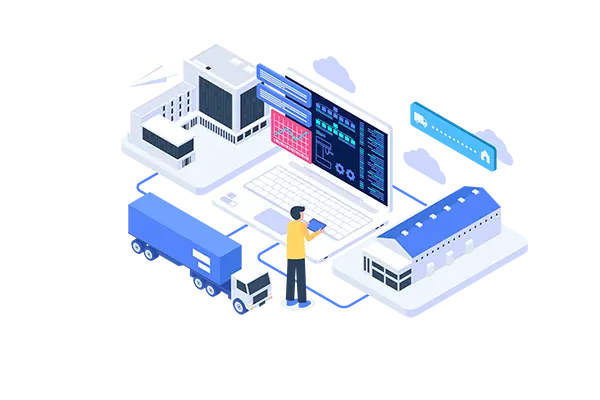
System Integration Services That Reduce Manual Work
System integration services connect separate systems and automate data movement between them.
Univision Computers designs API integrations and enterprise application integrations for organizations that need reliable connections between business applications.
Our integration architecture meets five core requirements:
- Reliable integrations use retries, idempotency, monitoring, and alerting to maintain data flow.
- Secure integrations use least-privilege access, secrets management, and encryption to protect systems and data.
- Scalable integrations accommodate increasing transaction volumes and changing business requirements.
- Maintainable integrations use clear documentation and handover-ready code to support ongoing management.
- Auditable integrations record system activity through logging that supports compliance and troubleshooting.
What Our System Integration Services Connect
App-to-App Integrations
App-to-app integrations synchronize data and actions between business applications.
- CRM integrations: Salesforce, HubSpot, Dynamics 365
- ERP integrations: NetSuite, SAP, Oracle, Microsoft Business Central
- Accounting integrations: QuickBooks, Xero
- Marketing integrations: Marketo, Mailchimp, Klaviyo
- Support integrations: Zendesk, ServiceNow, Intercom
- Collaboration integrations: Slack, Microsoft Teams, Google Workspace, SharePoint
Data Integrations
Data integrations move, synchronize, validate, and transform information between operational systems and reporting platforms.
- ETL/ELT pipelines to a warehouse (Snowflake, BigQuery, Redshift)
- Bi-directional data sync between operational systems
- Master data management patterns (source of truth design)
- Data validation, deduplication, and mapping
API Integrations
API integrations enable internal systems and third-party platforms to exchange data and trigger actions.
- REST API integration development
- GraphQL API integrations
- SOAP integrations for legacy enterprise systems
- API authentication: OAuth2, API keys, SSO/JWT
- Rate-limit handling, pagination, batching, retries
Middleware and iPaaS Implementations
Middleware and iPaaS platforms coordinate data movement and workflows across connected systems.
- Middleware architecture and integration strategy
- iPaaS setup and governance (workflows, connectors, security)
- Orchestration, transformation, and routing
- Integration lifecycle management and monitoring
Legacy System Integrations and Modernization
Legacy system integrations connect older business platforms with current applications and cloud services.
- Legacy-to-cloud integration
- File-based integrations (SFTP, CSV) with validation and automation
- Incremental modernization (strangler pattern)
- Event-driven integration where needed
Popular System Integration Use Cases
Lead-to-cash automation: CRM → quoting → invoicing → ERP/accounting
Order management integration: eCommerce → ERP → shipping → inventory updates
Customer support sync: support tickets ↔ CRM ↔ product usage events
Employee onboarding automation: HRIS → IT provisioning → access control
Real-time dashboards: operational tools → data warehouse → BI
Why Choose Us for
System Integration Consulting & Development
- Integration-first engineering: Univision Computers plans for failures, changes, and scale from the start of the project
- Vendor-neutral guidance: custom code vs iPaaS, recommended based on ROI, not referral fees
- Documentation you can use: architecture diagrams, data mappings, API specs, and operational runbooks
- Automation mindset: the goal is measurable reduction in manual work
System Integration FAQs
What is system integration?
System integration connects separate software applications, databases, and services so they can share data and automate workflows—often through APIs, webhooks, middleware, or ETL/ELT pipelines.
What’s the difference between API integration and data integration?
API integrations typically move operational data between apps in near real-time. Data integrations focus on analytics/reporting pipelines, often into a data warehouse, with stronger transformation and historical tracking.
Do you build custom integrations or use iPaaS tools?
Both. We recommend custom integration development when requirements are complex or performance/security needs are high, and iPaaS when speed, maintainability, and standard connectors offer better ROI.
How long does a system integration project take?
Small SaaS integrations can take days to weeks. Multi-system or enterprise integrations can take weeks to months depending on complexity, data quality, and stakeholder approvals.
Can you integrate legacy systems that don’t have APIs?
Yes. We can use file-based exchanges (SFTP/CSV), database-level integrations, RPA as a fallback, or wrap legacy services with a modern API where feasible.