Why Security Awareness Training Matters
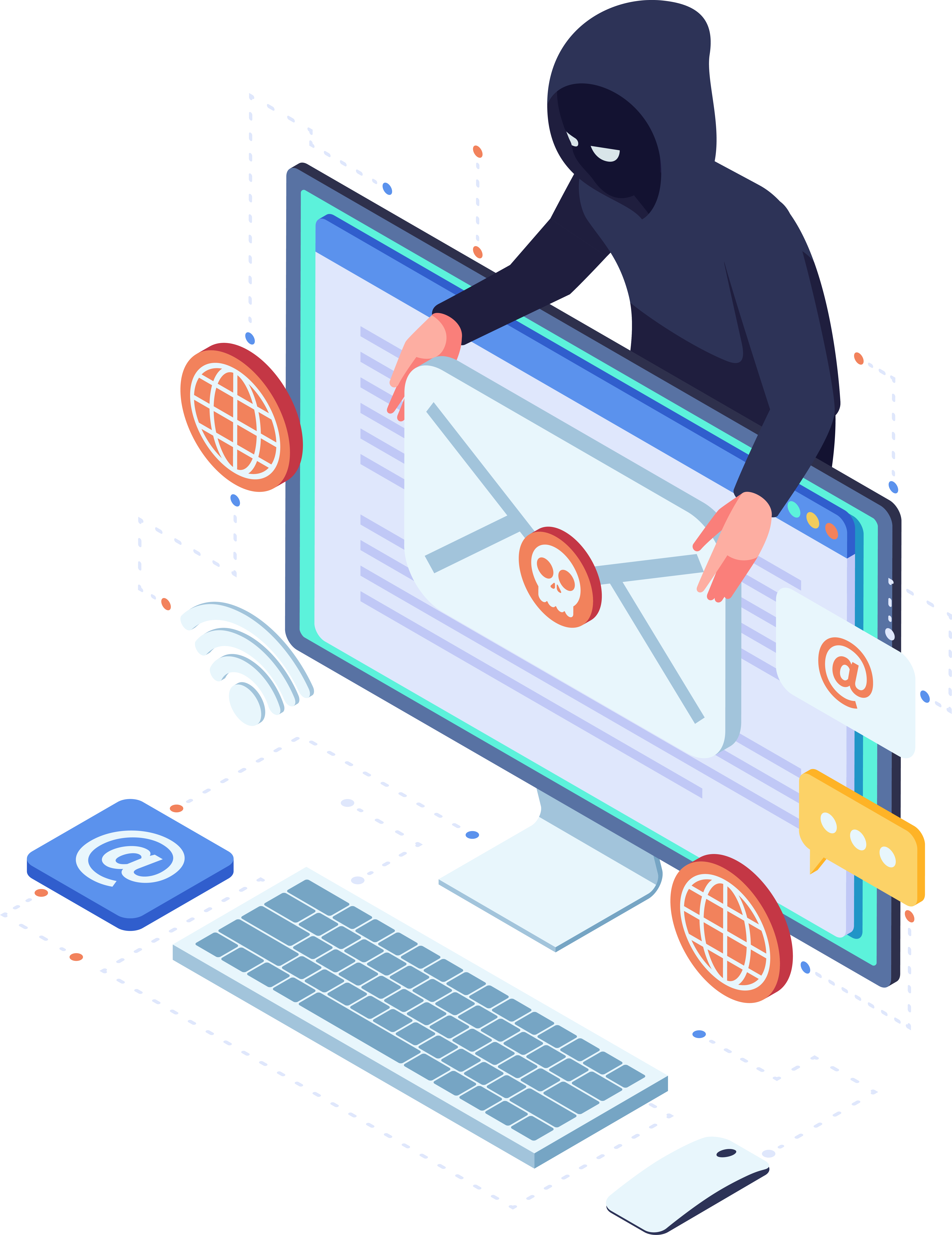
Modern attacks don’t always “hack” systems—they trick people. Phishing, business email compromise (BEC), and social engineering target employees with convincing emails, SMS messages (smishing), calls (vishing), and fake login pages.
Security awareness training helps you:
- Reduce successful phishing attempts and credential compromise
- Improve reporting rates (“Report Phish” behavior)
- Build a security-first culture across departments
- Support compliance initiatives and audit readiness
- Lower the chance of ransomware infections and data breaches
What’s Included: Training + Phishing Simulations
Security Awareness Training for Employees
Short, practical modules focused on real-world threats and everyday decisions, including:
- Phishing awareness and spotting red flags
- Password security + MFA best practices
- Data handling and privacy basics
- Safe browsing and malware prevention
- Remote work security and device hygiene
- Secure use of email, Teams/Slack, and file sharing
- Executive and finance-focused BEC protection
Options include onboarding training, monthly micro-learning, and role-based content for HR, finance, IT, and executives.
Phishing Tests (Phishing Simulation Campaigns)
We run realistic phishing simulation tests that mirror current attacker tactics—safely.
Phishing test capabilities can include:
- Scheduled or randomized phishing campaigns
- Difficulty tiers from basic to advanced spear-phishing scenarios
- Landing page simulations (no credential collection unless explicitly approved and configured securely)
- Smishing and vishing simulations (where appropriate)
- Department, role, or location targeting
- Immediate “teachable moments” when someone clicks
Reporting, Metrics & Risk Reduction Tracking
You can’t improve what you don’t measure. We provide reporting to show:
- Click rate / interaction rate
- Credential submission attempts (if enabled)
- Phish reporting rate (best indicator of maturity)
- Repeat offenders vs. improving users
- Trends over time by team, role, and location
- Penetration Testing Measurements
We turn metrics into a simple plan: what to train next, who needs targeted coaching, and how to reduce risk quarter over quarter.
Compliance & Audit Support
Security awareness training and phishing simulations are commonly used to support requirements across many frameworks and regulations. We can help you align training evidence and reporting to your compliance needs (based on your environment and obligations), such as:
- Security training and acceptable use policy reinforcement
- Proof of completion and periodic training cadence
- Risk-based or role-based training plans
- Continuous improvement reporting
- Audit readiness
Benefits of a Security Awareness Program
A strong security awareness program is designed to change behavior, not just “check a box.” With the right mix of training and simulation:
- Fewer successful attacks: employees spot suspicious links, attachments, and login prompts
- Faster incident response: staff report suspicious activity earlier
- Reduced business risk: fewer compromised accounts and fewer costly incidents
- Better compliance posture: supports policies, documentation, and audit needs
- Consistent security habits: secure decisions become part of daily work
Security Awareness FAQs
What is security awareness training?
Security awareness training teaches employees how to recognize and avoid cyber threats like phishing, social engineering, and credential theft, and how to follow secure company practices.
What is a phishing test (phishing simulation)?
A phishing test is a controlled simulation that sends realistic phishing messages to employees to measure susceptibility, reinforce safe behavior, and improve reporting.
How often should we run phishing simulations?
Many organizations run monthly or quarterly simulations, depending on risk level, industry, and training goals. A consistent cadence is more effective than one-off tests.
Do phishing tests punish employees?
Effective programs focus on coaching and behavior change—not blame. The goal is to build a supportive security culture that improves over time.
What metrics should we track?
Common metrics include click rate, report rate, and repeat clickers. Over time, the most meaningful improvement is often a higher reporting rate and fewer risky interactions.
Worrying Flaws Already Discovered in Google’s Antigravity IDE
Google’s new Antigravity IDE landed with a lot of buzz. Marketed as an AI-first development environment, it helps teams ship code faster by letting intelligent agents write, test, and even manage parts ...
Glassworm Returns With Another VS Code Attack Wave
Another VS Code attack wave is in the spotlight, and security researchers are sounding the alarm. A malware family known as Glassworm has resurfaced across both the Microsoft Visual Studio Marketplace and ...